Introduction
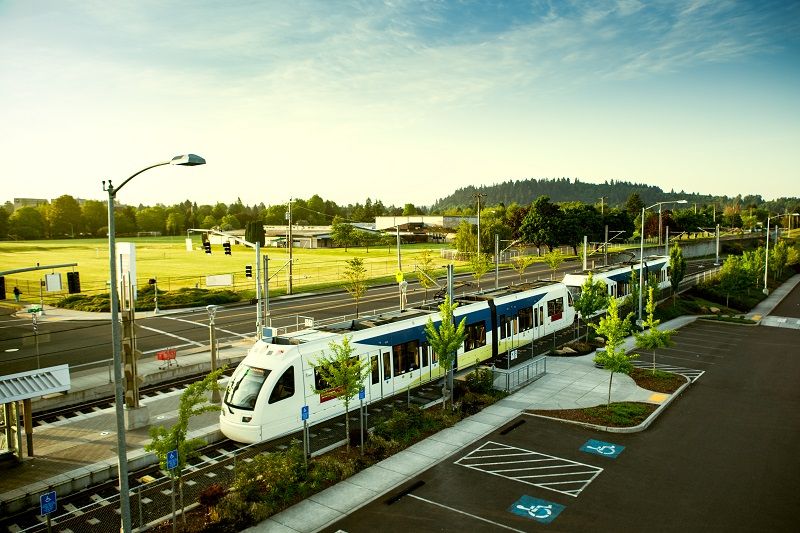
During the past decade, Portland-area planners have embraced Transit-Oriented Development (TOD) as the region’s dominant land use/transportation strategy. They assert that TOD, especially based on light rail, will reduce traffic congestion, increase transit use, and make neighborhoods more livable. Transit-oriented development is generally defined as compact, mixed-use development that concentrates retail, housing and jobs in neighborhoods well-served by public transit. TOD has become so important to local planners that it is now the primary justification for expansion of Portland’s light rail system. Rail advocates concede that light rail is not worth the cost if it is built only as a transit system.
Dozens of TODs have been constructed in the Portland region since 1990, with several winning national acclaim. Most have received public subsidies, on the assumption that the public benefits of TOD outweigh the costs. However, little is known about how transitoriented projects actually perform in terms of transit use and any correlated reduction in auto dependency. The purpose of this paper—the second in a series of Cascade Policy Institute TOD case studies—is to help fill in that gap.
About Cascade Policy Institute: Founded in 1991, Cascade Policy Institute is Oregon’s premier policy research center. Cascade’s mission is to explore and promote public policy alternatives that foster individual liberty, personal responsibility and economic opportunity. To that end, the Institute publishes policy studies, provides public speakers, organizes community forums and sponsors educational programs.
Cascade Policy Institute is a tax-exempt educational organization as defined under IRS code 501(c)(3). Cascade neither solicits nor accepts government funding and is supported by individual, foundation and business contributions. Nothing appearing in this document is to be construed as necessarily representing the views of Cascade or its donors, or as an attempt to aid or hinder the passage of any bill before any legislative body. The views expressed herein are the author’s own. Copyright 2006 by Cascade Policy Institute. All rights reserved.